A real interview, then a recruiter's honest feedback.
Vocaway recreates a complete job interview, from the welcome to your closing questions, with an AI recruiter that draws on your CV and the job posting. Then it tells you what it thought of you.
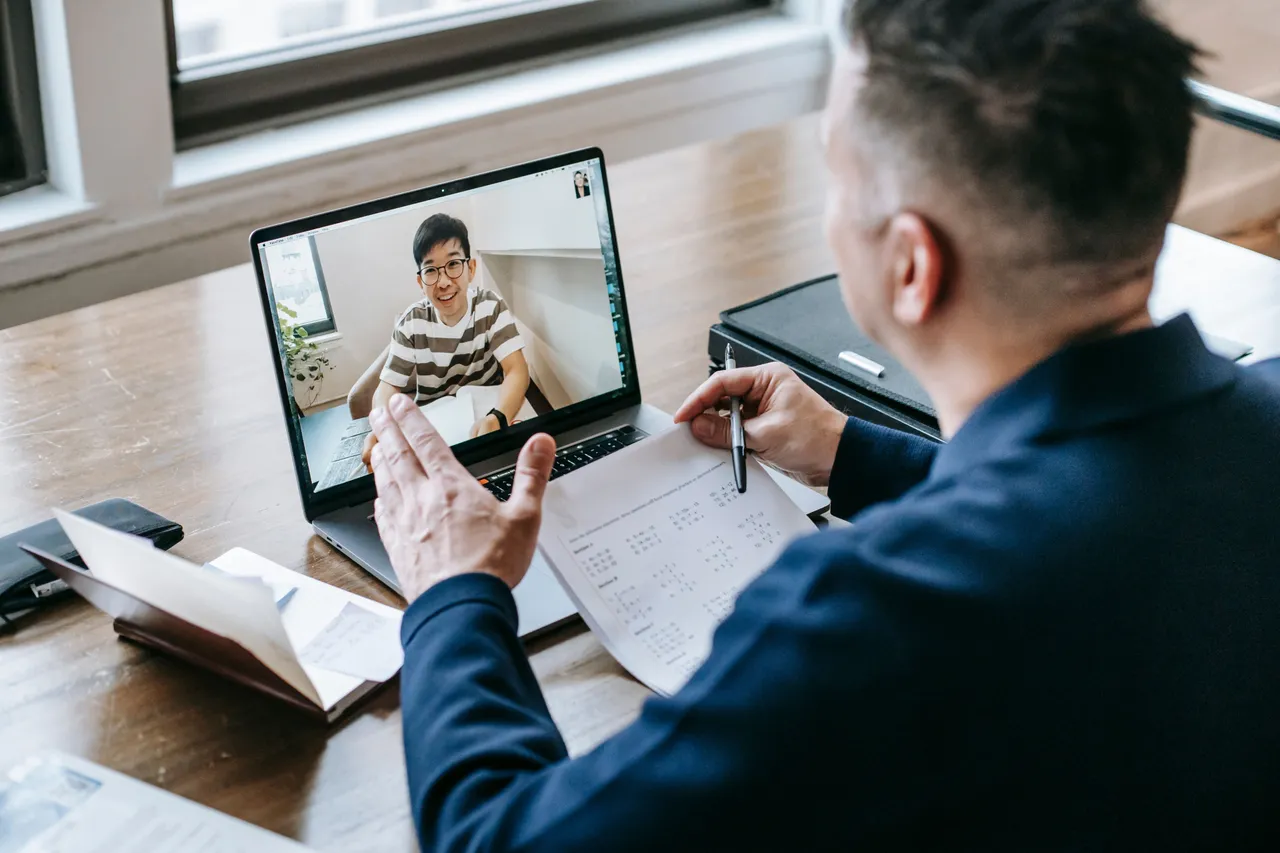
A job interview isn't won on what you know, but on what you manage to demonstrate in well under an hour. Vocaway lets you rehearse that exercise as often as you need, with questions close to the ones a real recruiter would ask and honest feedback after every attempt.
- Criteria assessed the way a recruiter would
- 6
- Documents taken into account: CV, job posting and cover letter
- 3
- Interviews and documents hosted in France
- 100%
THE FLOW
The seven stages of a real interview
The AI recruiter follows the structure of a first-round interview and adapts its pace to the length you choose. You don't know in advance which questions are coming: just like the real thing.
Welcome
The recruiter opens with an introduction, explains how the interview will run and gets you into interview mode from the very first minute.
“Tell me about yourself”
Your one- to two-minute introduction, then a follow-up question about a choice or a transition in your career.
Motivation
Why this role, why this company, why now, and what you know about the company.
Experience and skills
Two or three behavioral questions drawn from the job posting and your CV: the situation, what you did, the result.
Practical scenario
A real-world case drawn from the role's responsibilities: how would you handle it?
Tough questions
A weakness, a failure, an employment gap, your salary expectations or “why you rather than another candidate?”.
Your questions and the wrap-up
The recruiter gives you the chance to ask your own questions, then wraps up, just like in a real interview.
WHAT THE RECRUITER ASSESSES
Six criteria: a real recruiter's scorecard
Behind every question, a recruiter wants to know three things: can you do the job, do you really want it, and will you fit in with the team? That's exactly what Vocaway assesses you on.
Motivation
Do you really want this job?
Specific reasons for joining this company and taking on this role, not a generic speech. The recruiter checks that you've done your homework and that your career plans make sense.
Role fit
Can you do the job?
A clear link between your experience, your skills and the responsibilities in the job posting, and the ability to explain how you would approach the role.
Concrete evidence
Can you back up what you claim?
Specific examples, with your personal role and measurable results. A quality you claim without an example doesn't count.
Soft skills
Will you fit in with the team?
Teamwork, adaptability, self-awareness about your strengths and areas to work on, and a respectful attitude, including toward former employers.
Composure
Do you keep your cool?
Honest, composed answers to sensitive questions: weaknesses, failures, employment gaps, salary expectations, objections.
Communication
Can you win them over?
Clear, structured and concise answers that actually address the question, plus good questions to ask at the end of the interview.
On top of that comes your delivery, measured objectively: pace, silences and filler words.
Take my first interviewTHE REPORT
What you'll know after every interview
Usually less than a minute after the interview, you receive a complete report, downloadable as a PDF, that tells you exactly what to fix.
 The recruiter's view — would it have invited you to the next round? Its decision and its reasons, with no sugarcoating.
- The recruiter scorecard — a score on each of the six criteria, backed up by your answers.
- Question by question — what the recruiter was looking for, how your answer measured up and what you should have highlighted.
- Delivery — your pace, your silences and your filler words, measured objectively.
- The action plan — the priorities to prepare that will make the biggest difference before the real interview.
- The annotated transcript — the whole conversation, with your hesitations, vague wording and strong points highlighted.


KEY STRENGTHS
What makes the practice effective

It reads your CV and the job posting
The recruiter uses your documents to ask precise questions, spot gaps between your profile and the job posting and check that your background hangs together.

Three recruiter attitudes
Supportive, demanding or under pressure: choose the difficulty level that suits where you are in your preparation.

The recruiter scorecard
Motivation, role fit, concrete evidence, soft skills, composure and communication: the criteria actually used in hiring.
Replay to improve
Restart the same interview in one click, with your documents, and track your progress criterion by criterion.
Pace and silence tracking
Pace, pauses, hesitations and filler words, measured objectively in every interview.
Sovereign Mistral AI engine
Artificial intelligence models hosted within the European Union, with strict confidentiality for your data.
Ready to land your next job?
 1 free practice credit when you sign up
- No credit card required
- The recruiter's verdict and your action plan as soon as the interview ends

FAQ
Frequently asked questions
You choose 10, 15 or 20 minutes. The 15-minute format covers every stage of a first-round interview. Your report is usually ready less than a minute after the conversation ends.
It extracts the text to prepare targeted questions: your experience, your dates, and the responsibilities and skills the job posting asks for. Your documents are only used for your interview: Vocaway does not train any model on them and asks Mistral AI not to use them to train its models.
It follows the structure of a real first-round interview, builds on your answers, follows up when you stay vague and asks the tough questions recruiters ask. It also stays within the law: no questions about your age, family situation, health or origins.
They stay in your history for as long as you want: the transcript and report of each interview let you track your progress. You can delete an interview at any time from your history or from its report: everything is permanently erased. Vocaway does not train any model on your interviews and asks Mistral AI not to use your content to train its models.
That's exactly where it helps most. Start with a supportive recruiter, rehearse in a private space with no one watching, then raise the difficulty as your confidence grows.
The recruiter's view and decision, a score on the six recruiter criteria, an analysis of each question, your delivery (pace, silences, filler words), the priority actions to prepare and the annotated transcript of the interview.
What happens in a Vocaway interview?
Enter the role, upload your documents, choose the recruiter's attitude and start talking. The recruiter listens, builds on your answers, follows up when you're vague and sticks to the structure of a real first-round interview. Your report usually arrives less than a minute later.
Prepare for my interview